
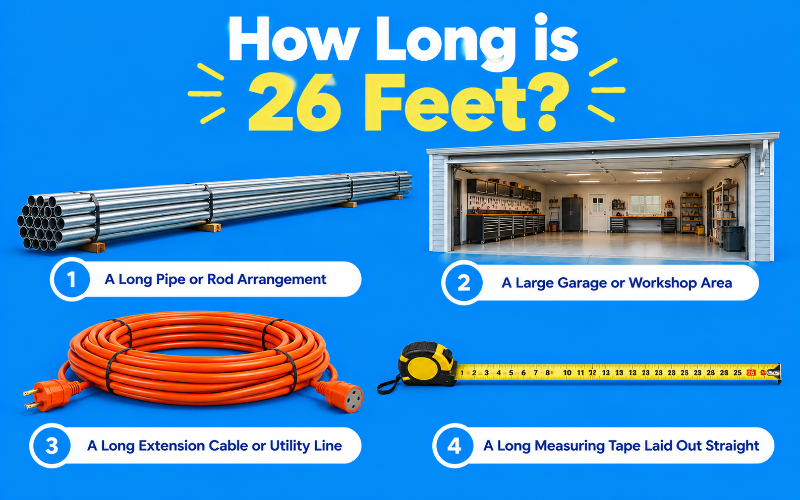
If you are wondering how long is 26 feet, it is equal to 312 inches, 7.9248 meters, or 792.48 centimeters. This is a considerable length that can help describe large household spaces, recreational equipment, long fabric rolls, fences, boats, and other everyday structures. Visualizing 26 feet can be challenging without a measuring tool, but comparing it with familiar objects makes the measurement easier to understand.
A length of 26 feet is just over 7.9 meters and slightly shorter than 27 feet. It is also more than twice the length of a standard 12-feet room dimension. Because this measurement is larger than most individual household objects, combining several familiar items or imagining a long structure can help you picture the distance.
How Long Is 26 Feet?
26 feet is equal to 312 inches, 7.9248 meters, or 792.48 centimeters. This measurement can help you visualize long spaces, materials, and everyday objects.
How Long Is 26 Feet?
Understand this length with simple measurement conversions.
Multiply 26 feet by 12 to get 312 inches.
26 feet measures 7.9248 meters in the metric system.
There are 792.48 centimeters in 26 feet.
How Long Is 26 Feet?
26 feet equals 312 inches, 7.9248 meters, 792.48 centimeters, and 7,924.8 millimeters. It is approximately 7.92 meters long.
For a quick visual estimate, imagine a straight line measuring slightly less than 8 meters. You can also picture two 13-feet sections placed end to end. Together, these sections measure exactly 26 feet.
Since most household items are shorter than this distance, using long structures or combining multiple objects is often the easiest way to understand the measurement.
26 Feet in Different Measurements
Converting 26 feet into other units helps you compare this length with measurements used in different countries and situations.
| Measurement Unit | Equivalent to 26 Feet |
|---|---|
| Feet | 26 feet |
| Inches | 312 inches |
| Yards | 8.67 yards |
| Centimeters | 792.48 cm |
| Meters | 7.9248 m |
| Millimeters | 7,924.8 mm |
The most useful conversions to remember are 26 feet = 312 inches and 26 feet = 7.9248 meters. For everyday estimates, you can round the length to approximately 7.9 meters or almost 8 meters.
What Does 26 Feet Look Like?
Twenty-six feet is a long distance compared with ordinary household objects. A standard ruler is only 12 inches long, meaning you would need 26 one-feet sections placed end to end to cover this distance.
Another way to picture 26 feet is to imagine two equal sections, each measuring 13 feet. When placed together in a straight line, they create a total length of 26 feet.
You can also visualize this measurement as a long fence section, a large recreational setup, or a row of objects arranged end to end. These comparisons help turn an abstract number into a distance you can imagine in a real setting.
Keep in mind that the exact dimensions of fences, recreational equipment, and other structures vary. For accurate planning, always measure the actual item or check its listed dimensions.
Why Is Knowing How Long 26 Feet Is Useful?
Knowing how long 26 feet is can help with several practical tasks. Homeowners may use this measurement when planning fencing, measuring a long garden area, arranging outdoor furniture, or estimating the available space in a garage.
It can also be useful when shopping for large items. Recreational equipment, fabric rolls, utility lines, and long storage arrangements may have dimensions measured in feet. Converting those dimensions into meters or inches makes it easier to compare different products.
For DIY projects, understanding 26 feet can help you estimate the quantity of materials required. For example, if a project requires a continuous 26-feet length of material, knowing the equivalent of 312 inches can help when using an inch-based measuring tool.
Read More: How Long Is 25 feet ? A Simple Visual Guide
9 Common Everyday Things That Help You Visualize 26 Feet
The following examples provide practical ways to picture a length of 26 feet. Some are individual structures that may approach this size, while others are combinations or arrangements that can be measured to reach exactly 26 feet. Actual dimensions vary, so use these comparisons as visual guides rather than assuming every example is exactly 26 feet long.
1. A Long Fabric or Material Roll
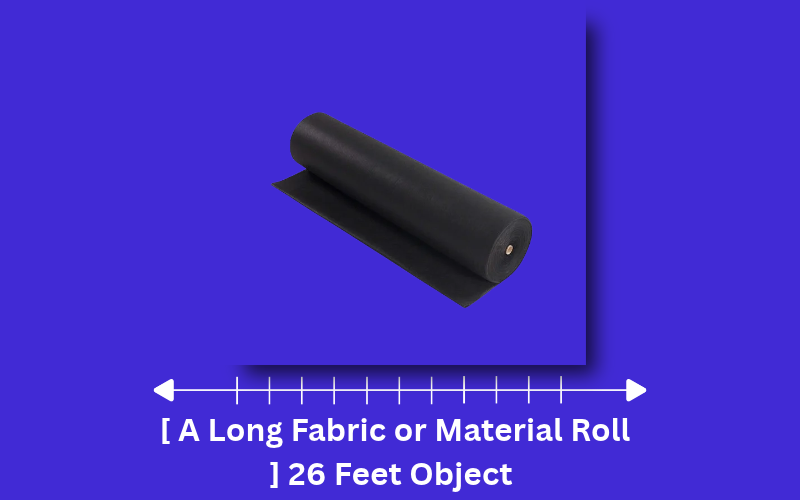
A long roll of fabric or other material can provide another practical comparison. Fabric may be sold by the yard or meter, and a roll containing 26 feet of usable material represents the full length you are trying to visualize.
A 26-feet fabric length equals 8.67 yards, which is useful when comparing measurements given in different units. If you spread the material out in a straight line, the distance from one end to the other will cover nearly 8 meters.
This comparison is particularly helpful for sewing, decorating, upholstery, and event preparation. Remember that the length of the material is different from the width of the roll.
2. A Long Storage Shelf Arrangement
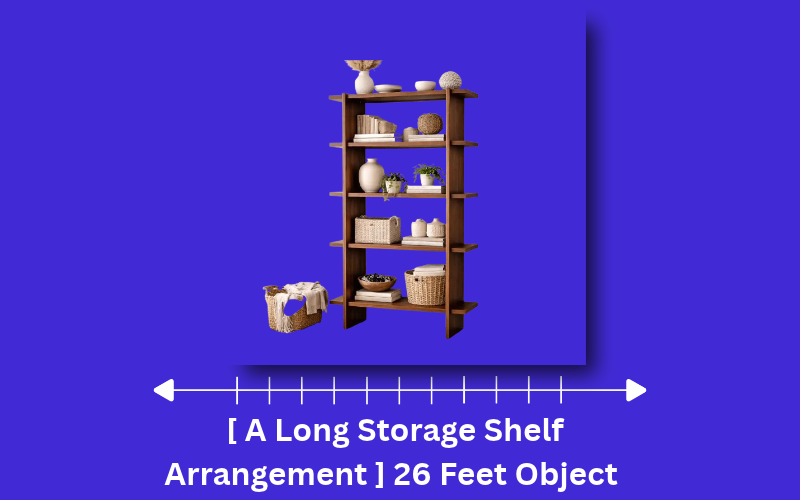
A long storage shelf arrangement can help demonstrate 26 feet when multiple shelving units are placed in a row. For example, two shelving sections measuring 13 feet each would combine to create exactly 26 feet of total length.
In a home, garage, workshop, or storage facility, a row of shelves may extend across a substantial wall. Imagining the full arrangement can make it easier to understand how much horizontal space 26 feet occupies.
Individual shelving units are usually much shorter than 26 feet, so this comparison refers to a combined arrangement. Check the dimensions of each unit and leave room for supports or gaps when planning a real installation.
3. A Long Pipe or Rod Arrangement
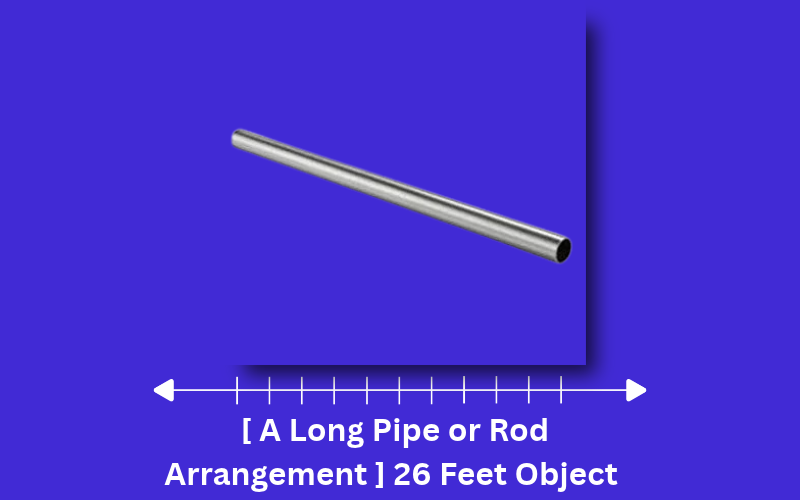
Long pipes and rods are common in construction, plumbing, landscaping, and home improvement projects. Several connected or aligned sections can represent a total length of 26 feet.
For instance, two straight pipe sections measuring 13 feet each would add up to 26 feet. The combined length is equivalent to 312 inches or 7.9248 meters.
When comparing pipes or rods, distinguish between the total length of the pieces and the usable length after connectors or fittings are installed. If the measurement is important for a project, follow the product specifications and measure the finished arrangement.
4. A Long Wooden Board Arrangement
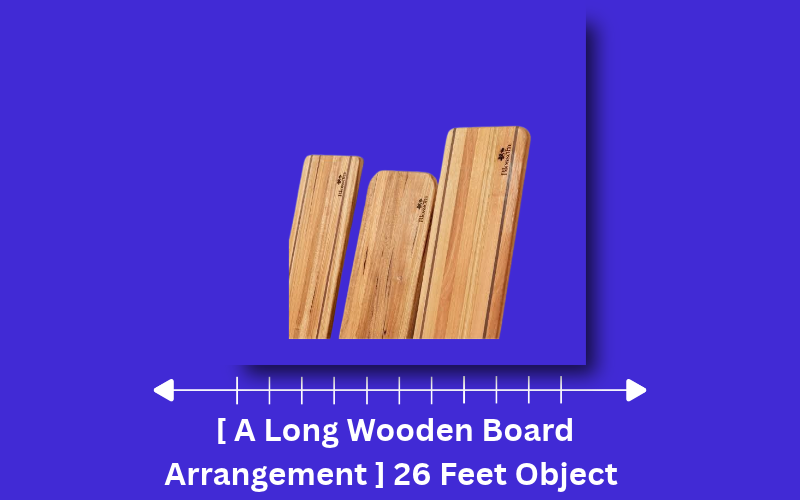
A long wooden board arrangement can represent 26 feet when shorter boards are placed end to end. This is a helpful comparison for people working on carpentry, decking, fencing, or other DIY projects.
For example, four boards that are each 6.5 feet long add up to exactly 26 feet when their lengths are combined. The result creates a continuous distance that is easy to compare with a long outdoor structure.
In practical projects, boards may overlap or require cuts, so the final usable length can differ from the total length of the individual pieces. Always measure before cutting or assembling materials.
5. A Large Garage or Workshop Area
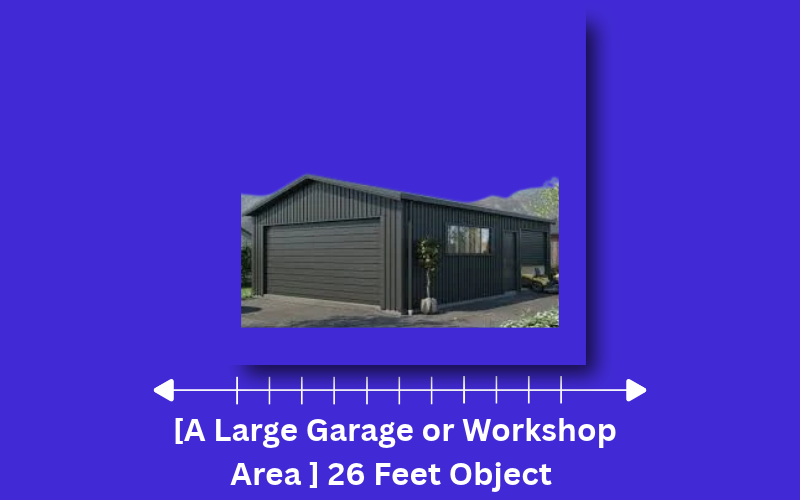
A long garage or workshop area can help you visualize 26 feet. Imagine measuring a straight line across a floor, from one marked point to another, with a total distance of 26 feet.
This distance may be useful when checking whether a vehicle, workbench arrangement, or storage plan will fit into a particular space. However, the actual dimensions of garages and workshops differ, so the room itself should not be assumed to measure 26 feet.
Marking the distance on the floor with removable tape can make the measurement much easier to see. This technique is particularly useful when planning where to place large equipment or storage units.
6. A Long Extension Cable or Utility Line
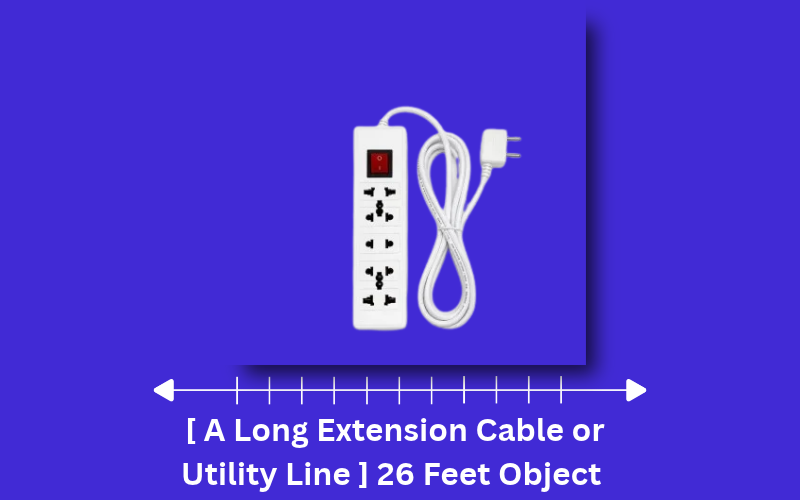
An extension cable or utility line can be used as a visual reference if its measured length is 26 feet. Cables are commonly available in different lengths, making them useful for understanding how far a particular distance extends.
A cable measuring 26 feet would stretch 312 inches from end to end when laid out straight. Its length is also approximately 7.92 meters.
For accurate comparison, check the cable label rather than estimating its size by appearance. When using electrical cables, follow the manufacturer’s safety guidance and avoid stretching or placing cables where they could create a tripping hazard.
7. A Large Decorative Banner
A long decorative banner can provide another example of a 26-feet measurement. Banners used for events, celebrations, school activities, and outdoor displays can be made in a wide range of lengths.
A banner measuring 26 feet would extend almost 8 meters across when fully stretched. This makes it a helpful example for understanding the distance required to span a large display area.
The banner’s length should not be confused with its height. A banner can be very long while remaining relatively narrow, so check both dimensions when choosing one for a particular space.
8. A Long Boat or Watercraft
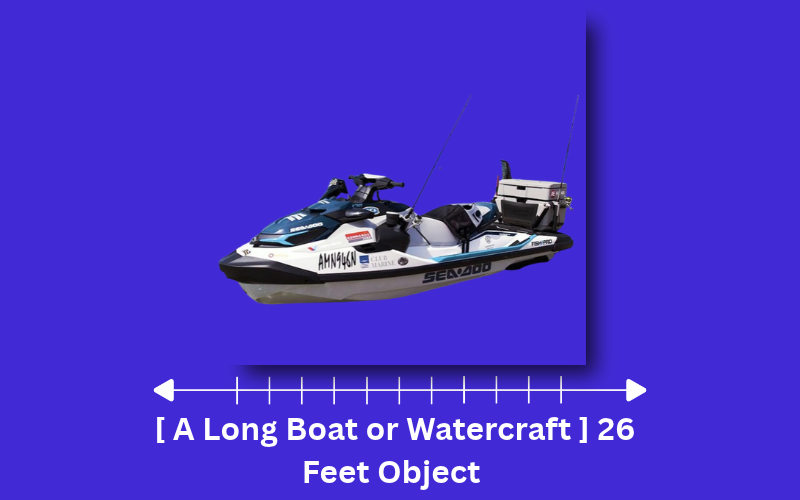
Some larger boats or watercraft may have an overall length close to 26 feet, depending on the type and model. This gives you a real-world way to imagine a structure extending nearly 8 meters from one end to the other.
A watercraft of this size can occupy substantial space on a trailer, at a dock, or in a storage area. However, boats come in many lengths, so not every boat will provide an accurate comparison.
When checking the dimensions of a specific boat, confirm whether the listed measurement includes attachments or other features that extend beyond the main body.
9. A Long Measuring Tape Laid Out Straight
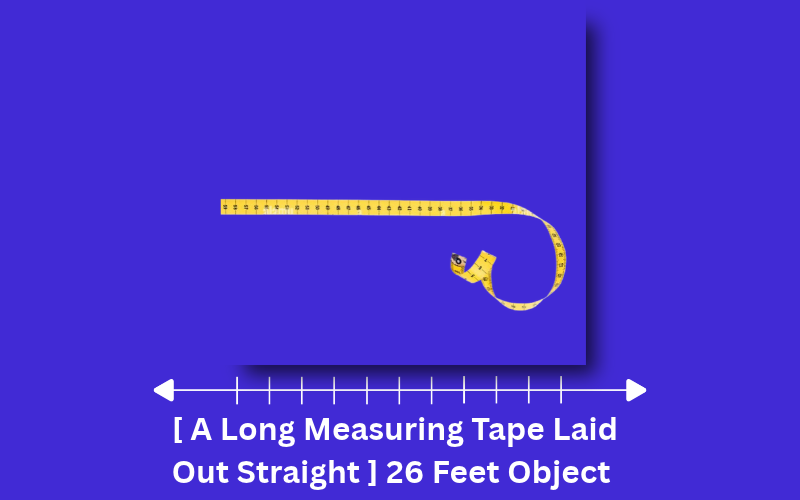
A measuring tape that extends to 26 feet gives you one of the most direct ways to understand the measurement. Many measuring tapes are marked in feet and inches, allowing you to locate the 26-feet point without performing a conversion.
If your tape uses inches, look for the 312-inch mark. The distance from zero to that point is exactly 26 feet.
This is the most reliable comparison in the list because the measurement can be checked directly. Keep the tape straight and taut while measuring, and make sure the starting point is aligned with zero.
How to Measure 26 Feet Without a Ruler
Measuring 26 feet without a ruler can be challenging because the distance is longer than most handheld measuring tools. However, you can estimate it by using objects with known dimensions or by dividing the distance into smaller sections.
One method is to mark a 13-feet section twice. Two sections of 13 feet add up to exactly 26 feet. You can use a suitable measuring tape to establish the first section and then repeat the same distance.
Another option is to use a long measuring tape or a marked rope. Measure 26 feet carefully, mark both endpoints, and use the marked length as a reference for future comparisons.
If you only need a rough estimate, remember that 26 feet is slightly less than 8 meters. This can help you visualize the distance, but it is not a substitute for accurate measuring when precision matters.
How to Read 26 Feet on a Measuring Tape
To measure 26 feet with a tape marked in feet, start at the zero point and extend the tape until it reaches the 26-feet mark.
If your tape is marked only in inches, convert the measurement first. Since each feet contains 12 inches, multiply 26 by 12 to get 312 inches.
Make sure the tape follows the correct measuring line. Keep it straight for a direct distance, or follow the surface if you need to measure along a path. Avoid leaving slack in the tape because that can make the measurement inaccurate.
How Long Is 26 Feet Compared With 10 Meters?
Twenty-six feet is shorter than 10 meters. Specifically, 26 feet equals 7.9248 meters, making it 2.0752 meters shorter than 10 meters.
This comparison is useful if you are more familiar with metric measurements. You can picture 26 feet as a distance that falls just over 2 meters short of a 10-meter line.
For quick estimates, remember that 26 feet is approximately 7.9 meters, while 10 meters is about 32.8 feet.
How Long Is 26 Feet Compared With 20 Feet?
Twenty-six feet is 6 feet longer than 20 feet. The difference is equal to 72 inches, or 1.8288 meters.
If you imagine a 20-feet line and add another 6 feet to its end, the total becomes 26 feet. This is a straightforward way to visualize the extra length.
This comparison is particularly helpful when comparing room dimensions, fence sections, long boards, and other structures that are measured in feet.
How Long Is 26 Feet Compared With 30 Feet?
Twenty-six feet is 4 feet shorter than 30 feet. Four feet equals 48 inches, so a 26-feet line falls 48 inches short of a 30-feet line.
This means 26 feet is fairly close to 30 feet but still noticeably shorter. For a quick mental comparison, imagine removing one 4-feet section from a 30-feet distance.
This can be useful when estimating the length of outdoor spaces, storage arrangements, and construction materials.
Common Mistakes When Estimating 26 Feet
One common mistake is assuming that a familiar object has a standard length when its dimensions may vary. Boats, tables, fence panels, cables, and storage units are available in different sizes, so always check their actual measurements.
Another mistake is confusing feet with inches. Twenty-six feet equals 312 inches, not 26 inches. This is a substantial difference and can lead to incorrect estimates when purchasing materials or planning a space.
It is also important to distinguish length from area. A 26-feet length describes a distance from one point to another. Square feet, on the other hand, describe an area and require a second dimension.
Finally, avoid relying entirely on visual estimates for projects that need precision. Use a measuring tape and verify the starting and ending points before cutting materials, installing structures, or placing large items.
I hope this article was helpful for you. Visit More articles:
- How Long Is 20 feet ? A Simple Visual Guide
- How Long Is 22 feet ? A Simple Visual Guide
- How Long Is 23 feet ? A Simple Visual Guide
- How Long Is 24 feet ? A Simple Visual Guide
- How Long Is 25 feet ? A Simple Visual Guide
FAQs
How long is 26 feet in inches?
26 feet equals exactly 312 inches because each feet contains 12 inches.
How many meters are in 26 feet?
26 feet equals 7.9248 meters, or approximately 7.92 meters.
How many centimeters are in 26 feet?
26 feet equals 792.48 centimeters.
Is 26 feet close to 8 meters?
Yes. Eight meters equals approximately 26.25 feet, so 26 feet is slightly shorter than 8 meters.
How many yards are in 26 feet?
26 feet equals approximately 8.67 yards because one yard contains 3 feet.
What everyday things can help visualize 26 feet?
Long fence arrangements, fabric rolls, combined shelving units, pipe arrangements, utility lines, and large furniture layouts can help you visualize 26 feet. Their actual dimensions vary, so check measurements before using them as exact references.
How can I measure 26 feet accurately?
Use a measuring tape that reaches at least 26 feet. If your tape is marked in inches, measure to 312 inches. Keep the tape straight and begin at the zero mark.
Is 26 feet longer than 25 feet?
Yes. It is exactly 1 feet longer than 25 feet, which is a difference of 12 inches.
How can I estimate 26 feet without a measuring tape?
You can make a rough estimate by imagining a distance slightly shorter than 8 meters or by combining two equal 13-feet sections. For an exact measurement, use a suitable measuring tool.
Read More: How Long Is 24 feet ? A Simple Visual Guide
Conclusion
So, how long is 26 feet? It equals exactly 312 inches, 792.48 centimeters, and 7.9248 meters. This length is just under 8 meters and can be visualized using long fence sections, material rolls, shelving arrangements, utility lines, outdoor layouts, and other extended structures.
Because many everyday objects are shorter than 26 feet, combining several objects or imagining a measured line can make this distance easier to understand. A 13-feet section repeated twice is another simple way to picture the total length.
For everyday estimates, remember that 26 feet is approximately 7.9 meters. When accuracy matters for construction, home improvement, furniture placement, or material purchases, use a measuring tape and confirm the exact dimensions before making decisions.