
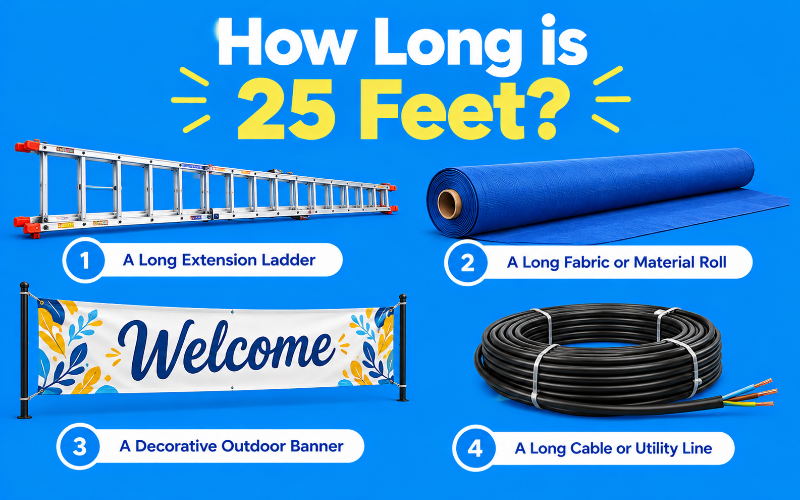
How long is 25 feet? 25 feet is equal to 300 inches, 7.62 meters, or 762 centimeters. It is a considerable length that can help you visualize the size of a room, a large vehicle, a recreational area, a long piece of material, or a section of outdoor space. Understanding this measurement is useful when planning home improvement projects, estimating distances, arranging furniture, or measuring objects without a measuring tape.
To picture 25 feet more easily, imagine five sections that are each 5 feet long placed end to end. Together, they create a total length of 25 feet. You can also imagine a line measuring 300 inches or approximately 7.6 meters.
How Long Is 25 Feet?
25 feet is equal to 300 inches, 7.62 meters, or 762 centimeters. This length can help you visualize larger spaces, room dimensions, and everyday measurement distances.
How Long Is 25 Feet?
Explore the exact conversions for this measurement.
Multiply 25 feet by 12 to get 300 inches.
Multiply 25 feet by 0.3048 to get 7.62 meters.
25 feet is exactly 762 centimeters.
How Long Is 25 Feet?
25 feet equals 300 inches, 7.62 meters, 762 centimeters, and 7,620 millimeters. It is also approximately 8.33 yards.
A simple way to visualize 25 feet is to imagine five 5-foot sections arranged in a straight line. Another method is to picture a length slightly longer than 7.5 meters.
The exact size of an object can vary, so everyday comparisons are useful for estimating the measurement rather than replacing an actual measurement.
25 Feet in Different Measurements
Converting 25 feet into other units helps you understand the same length in different measurement systems.
| Measurement Unit | Equivalent to 25 Feet |
|---|---|
| Feet | 25 feet |
| Inches | 300 inches |
| Yards | 8.33 yards |
| Centimeters | 762 cm |
| Meters | 7.62 m |
| Millimeters | 7,620 mm |
The most useful conversions to remember are 25 feet = 300 inches and 25 feet = 7.62 meters. If you normally use the metric system, thinking of 25 feet as approximately 7.6 meters can make the measurement easier to visualize.
What Does 25 Feet Look Like?
A length of 25 feet is longer than many ordinary household objects and can span a significant portion of a driveway, garden, or large indoor space. It is easier to understand when divided into smaller sections.
For example, five sections of 5 feet each add up to 25 feet. Alternatively, two sections of 12 feet and one section of 1 feet create the same total length.
You can also compare 25 feet with a 10-foot measurement. Two 10-foot sections plus another 5-foot section equal 25 feet.
These comparisons are useful when estimating distances, planning layouts, and understanding dimensions listed in product descriptions.
Why Is Knowing How Long 25 Feet Is Useful?
Knowing how long 25 feet is can help with a variety of everyday projects. When planning a garden, for example, you may need to estimate the length of a fence, outdoor walkway, or planting area.
The measurement can also be useful when purchasing fabric, rope, cable, decorative banners, or other materials sold by length. Understanding the dimensions before buying helps you estimate how much material you need.
For home improvement projects, 25 feet can serve as a reference when measuring rooms, arranging outdoor furniture, planning storage, or estimating the length of a work area. It is also helpful when comparing the dimensions of recreational equipment and other large objects.
Read More: How Long Is 24 feet ? A Simple Visual Guide
8 Common Everyday Things That Help You Visualize 25 Feet
The following examples can help you develop a better understanding of 25 feet. Some are useful as approximate visual comparisons, while others can be measured or arranged to create an exact 25-foot length.
1. A Long Storage Shelf Arrangement
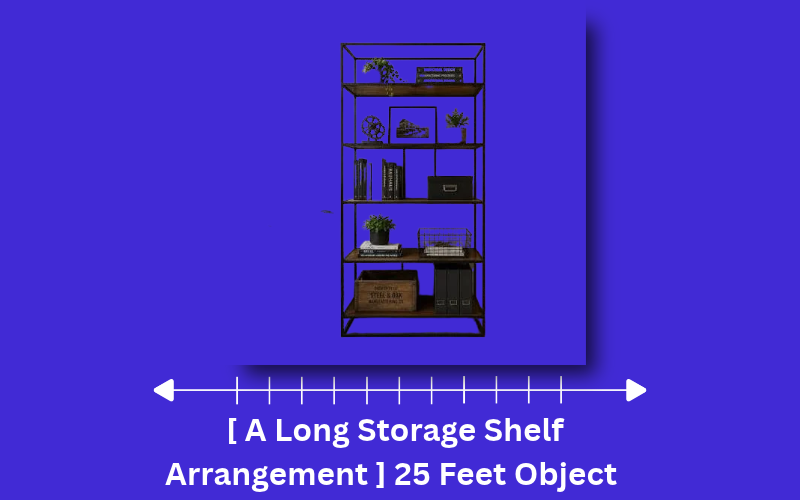
A long storage shelf arrangement can stretch across a wall, workshop, garage, or commercial storage area. When several shelving units are placed side by side, their combined length may approach 25 feet.
For example, five shelf sections measuring 5 feet each create a total length of exactly 25 feet when arranged end to end.
This example is especially useful for planning storage space. It also shows how several smaller objects can combine to create a much longer measurement.
2. A Long Extension Ladder
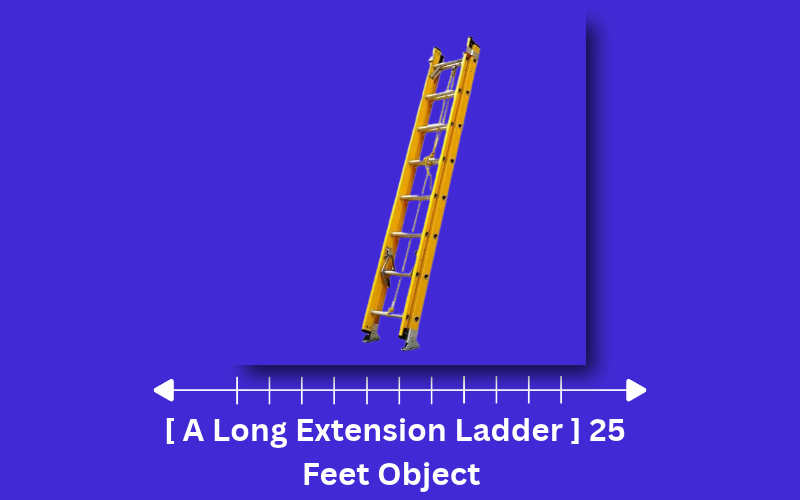
An extension ladder can help illustrate a length of 25 feet, depending on its design and configuration. Some ladders are advertised by their extended reach or overall extended length, so it is important to check which measurement the manufacturer provides.
A ladder measuring 25 feet in its fully extended configuration provides a direct reference for this distance. However, its stored length will generally be shorter because the sections slide together.
Always follow the manufacturer’s instructions when handling ladders. For visualization purposes, the stated dimensions are enough to understand how long 25 feet is.
3. A Long Fabric or Material Roll
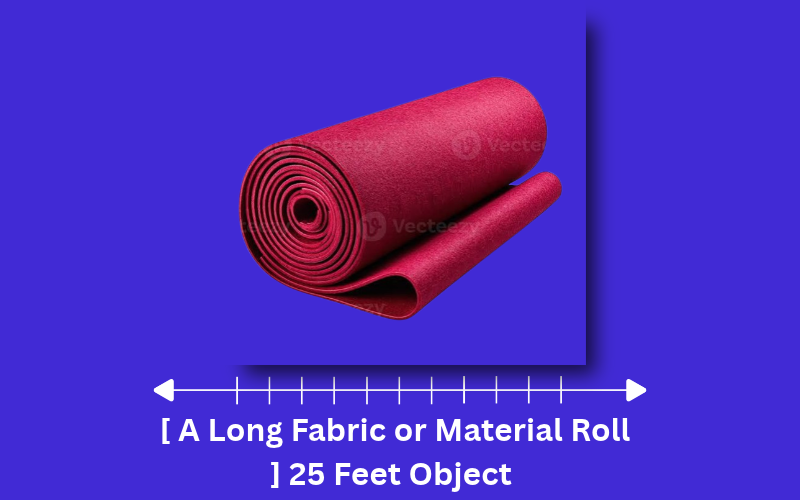
A roll of fabric, decorative material, or other flexible material can be cut to a length of 25 feet. This makes it a useful example for sewing, event decoration, upholstery, and craft projects.
If you measure 300 inches of material and lay it straight, you will have exactly 25 feet. The material may be narrow or wide, but its length remains the same.
Fabric rolls are particularly helpful for understanding long measurements because the material can be stretched along the floor and divided into smaller sections.
4. A Decorative Outdoor Banner
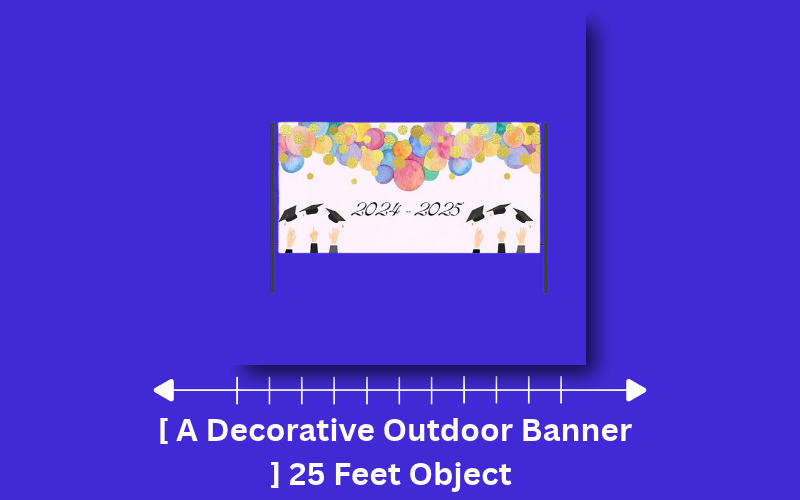
A long decorative banner used at a festival, school event, celebration, or community gathering can measure 25 feet from end to end.
For example, a banner made from a continuous strip of fabric or weather-resistant material can be measured to exactly 300 inches. Once stretched out, it provides a clear visual representation of the distance.
This comparison is useful for event planning because it helps you estimate how much space a decoration will occupy along a fence, wall, or temporary display structure.
5. A Long Workshop Bench Arrangement
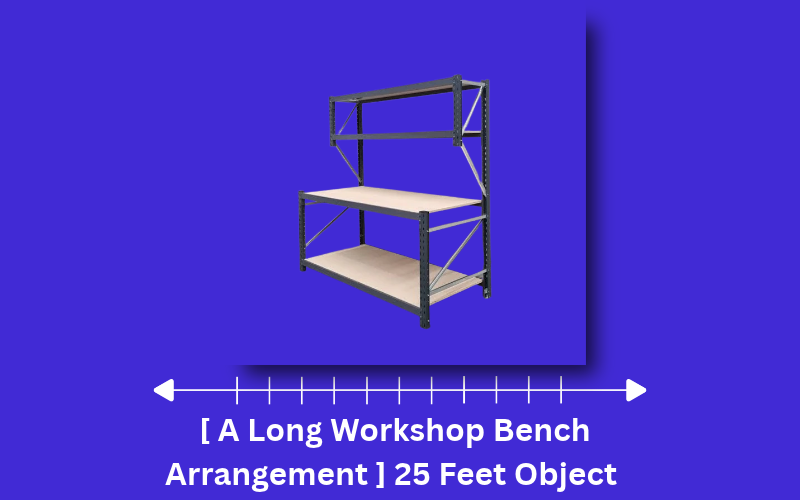
Several workshop benches placed in a row can create a combined length close to 25 feet. This arrangement might be found in a large garage, maintenance area, classroom, or shared workspace.
Five benches measuring 5 feet each would create a total length of 25 feet if their ends were placed together without gaps.
This example also demonstrates why measuring individual components is helpful. Instead of estimating one long arrangement by sight, you can add the known lengths of the individual sections.
6. A Long Cable or Utility Line
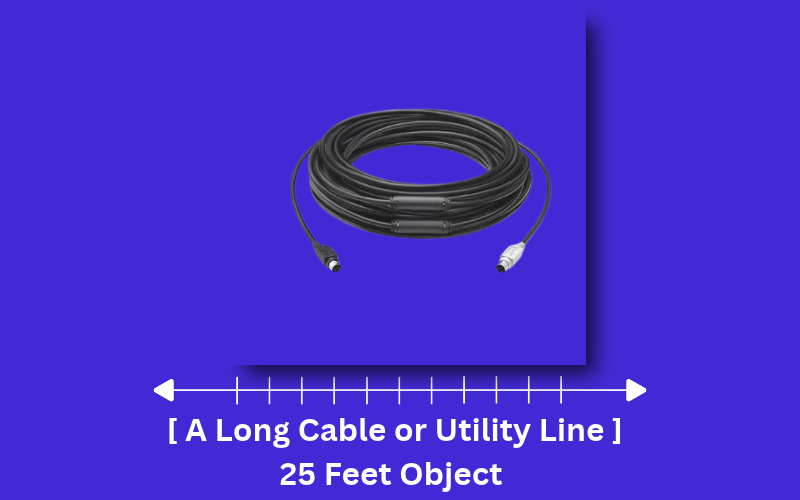
A cable or utility line that measures 25 feet is a practical example of this length. Extension cables, data cables, and other utility products are available in different lengths for household, workshop, and equipment use.
A cable labeled 25 feet can extend across a substantial distance when laid out straight. Its length is equivalent to 300 inches or 7.62 meters.
When planning cable placement, consider the route it needs to follow rather than measuring only the straight-line distance between two points. Always follow applicable electrical and product safety guidance.
7. A Long Wooden Board Arrangement
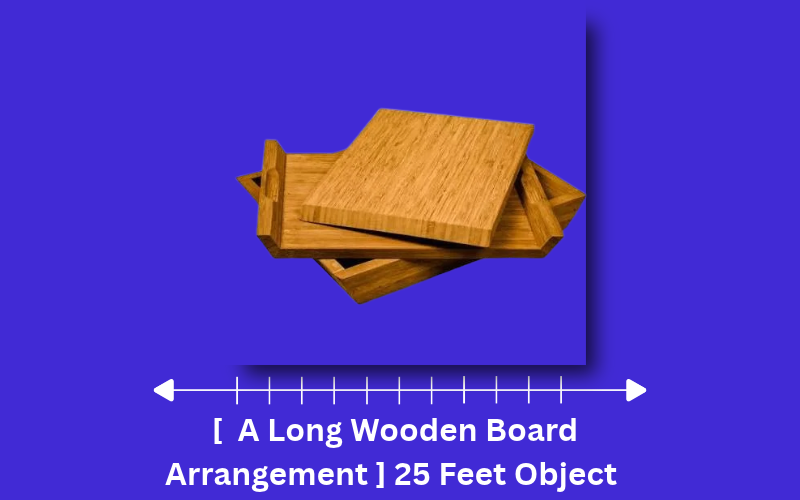
A long wooden board arrangement can represent 25 feet when several shorter boards are aligned end to end. This method is useful for understanding lumber measurements in construction, woodworking, fencing, and DIY projects.
Five boards measuring 5 feet each create a combined length of 25 feet. If the boards are intended for a construction project, the actual usable length may depend on how they are joined or cut.
This example makes a long measurement easier to understand because each individual board represents a manageable section of the total distance.
8. A Long Measuring Tape
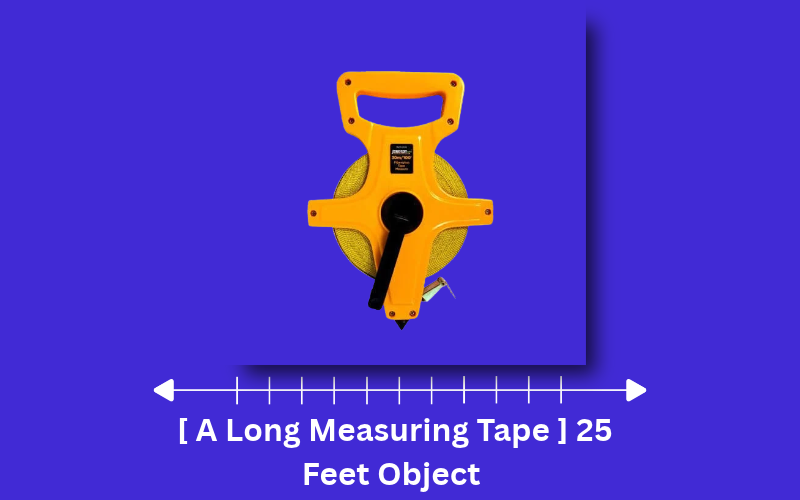
A measuring tape that extends to at least 25 feet is one of the most reliable tools for understanding this measurement. Many measuring tapes are designed for home improvement, construction, landscaping, and general maintenance.
By extending the tape from the zero mark to the 25-foot mark, you can see the complete length directly. This also helps you compare nearby objects and spaces with the same distance.
Unlike approximate object comparisons, a properly used measuring tape provides a practical way to check whether an area or material actually measures 25 feet.
How to Measure 25 Feet Without a Measuring Tape
If you do not have a long measuring tape, you can estimate 25 feet by dividing the distance into smaller sections. For example, mark five sections that are each approximately 5 feet long. Together, those sections add up to 25 feet.
You can also use objects with known dimensions. If you have a 5-foot-long item or a measured 5-foot section, repeat the same length five times in a straight line.
Another approach is to measure 300 inches using a shorter ruler or tape, moving it carefully along the distance. This method takes longer and requires attention to avoid gaps or overlaps.
For important construction, installation, or purchasing decisions, use a suitable measuring tape rather than relying solely on visual estimates.
How to Measure 25 Feet Accurately
To measure 25 feet accurately, use a measuring tape that is long enough to cover the distance or measure the area in smaller sections.
Start at the zero mark and extend the tape along the line you want to measure. Keep it straight and reasonably taut so the measurement is not affected by unnecessary bends or slack.
If you measure the distance in sections, record each length and add them together. For example, 10 feet + 10 feet + 5 feet equals 25 feet.
For curved routes or irregular spaces, the measurement may need to follow the actual path rather than the straight-line distance between the endpoints.
How Long Is 25 Feet Compared With 10 Feet?
25 feet is two and a half times as long as 10 feet.
Two 10-foot sections total 20 feet. Adding another 5 feet brings the overall length to 25 feet.
This comparison is useful because many people find it easier to visualize 10 feet than a longer distance. Imagine a 10-foot section repeated twice, followed by another half of that length.
How Long Is 25 Feet Compared With 1 Meter?
One meter equals approximately 3.28 feet, while 25 feet equals exactly 7.62 meters.
This means 25 feet is a little more than seven and a half meters long. If you are familiar with metric measurements, picturing a 7.6-meter line can make the distance easier to estimate.
For a quick calculation, divide feet by approximately 3.28 to convert the length into meters.
How Long Is 25 Feet Compared With a Yard?
One yard equals 3 feet. Therefore, 25 feet equals approximately 8.33 yards.
Eight full yards equal 24 feet, leaving another 1 feet. This makes 25 feet slightly longer than eight yards.
This conversion can be useful when measuring fabric, outdoor areas, and other materials that may be described using either feet or yards.
Common Mistakes When Estimating 25 Feet
One common mistake is estimating a long distance entirely by sight. Perspective can make an area look longer or shorter than it really is, especially outdoors or in large rooms.
Another mistake is confusing an object’s height with its length. A ladder, vehicle, canopy, or storage arrangement may have several different dimensions, so make sure you are comparing the correct one.
People may also forget to account for gaps between objects. Five 5-foot sections only create a continuous 25-foot length if the sections meet end to end without additional space between them.
Finally, remember that 25 feet is a length measurement, not an area measurement. If you are measuring a floor, patio, or room, you may need both length and width to calculate the total area.
I hope this article was helpful for you. Visit More articles:
- How Long Is 19 feet ? A Simple Visual Guide
- How Long Is 20 feet ? A Simple Visual Guide
- How Long Is 22 feet ? A Simple Visual Guide
- How Long Is 23 feet ? A Simple Visual Guide
- How Long Is 24 feet ? A Simple Visual Guide
FAQs
How long is 25 feet in inches?
25 feet equals exactly 300 inches.
How many meters are in 25 feet?
25 feet equals exactly 7.62 meters.
How many centimeters are in 25 feet?
25 feet equals 762 centimeters.
Is 25 feet a long distance?
It is a substantial length for many household objects and indoor spaces, although the significance depends on what you are measuring.
What objects can help me visualize 25 feet?
A long event canopy arrangement, recreational vehicle, extension ladder, garden hose, material roll, or combined shelf arrangement can help you visualize this length, depending on their actual dimensions.
How many 5-foot sections make 25 feet?
Five sections of 5 feet each equal 25 feet.
How many yards are in 25 feet?
25 feet equals approximately 8.33 yards.
Can I measure 25 feet without a long tape measure?
Yes. You can measure five smaller sections of 5 feet each or use a shorter measuring tool repeatedly. For accuracy, make sure each section begins where the previous one ends.
How can I remember the length of 25 feet?
Remember that 25 feet equals 300 inches or 7.62 meters. You can also picture five 5-foot sections arranged in a straight line.
Read More: How Long Is 23 feet ? A Simple Visual Guide
Conclusion
So, how long is 25 feet? 25 feet equals 300 inches, 7.62 meters, or 762 centimeters. It is a substantial length that can be easier to visualize by comparing it with long material rolls, garden hoses, recreational vehicles, extension ladders, and arrangements of smaller objects.
One of the simplest ways to understand this measurement is to imagine five 5-foot sections placed end to end. You can also remember that 25 feet is slightly longer than eight yards and a little more than 7.5 meters.
Everyday comparisons are useful for developing a sense of scale, but the actual dimensions of objects vary. If you need an accurate measurement for a home project, material purchase, storage arrangement, or outdoor layout, use a measuring tape and check the length carefully.