
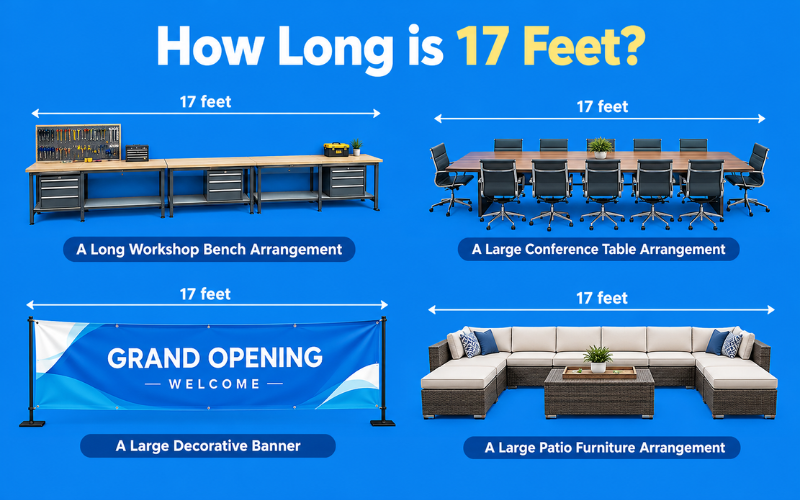
If you are wondering how long is 17 feet, the answer is that 17 feet equals 204 inches, 5.1816 meters, or 518.16 centimeters. This length is useful to understand when estimating the dimensions of large furniture arrangements, recreational vehicles, room spaces, outdoor structures, long boards, and other everyday objects. Although 17 feet may be difficult to visualize at first, comparing it with familiar objects can make the measurement easier to understand.
Seventeen feet is longer than most household furniture and many standard rooms are wide. It is also equivalent to seventeen 1-feet sections placed end to end. If you imagine a measuring tape stretched across a large room or a long vehicle, you can begin to understand how much space this distance covers.
How Long Is 17 Feet?
17 feet equals 204 inches, 5.1816 meters, or 518.16 centimeters. It is a useful length to visualize when measuring rooms, furniture, and larger objects.
How Long Is 17 Feet?
Understand this measurement using simple unit conversions.
17 feet contains 204 standard inches.
17 feet is approximately 5.18 meters long.
17 feet equals exactly 518.16 centimeters.
How Long Is 17 Feet?
17 feet equals 204 inches, 5.1816 meters, 518.16 centimeters, and 5,181.6 millimeters. It is also 5 feet longer than 12 feet and 3 feet shorter than 20 feet.
For a quick estimate, 17 feet is slightly more than 5 meters. Since 5 meters equals approximately 16.4 feet, adding a little more than half a feet gives you a close visual estimate of 17 feet.
17 Feet in Different Measurements
Converting 17 feet into other units makes it easier to understand, particularly if you are more familiar with the metric system.
| Measurement Unit | Equivalent |
|---|---|
| Feet | 17 feet |
| Inches | 204 inches |
| Centimeters | 518.16 cm |
| Meters | 5.1816 m |
| Millimeters | 5,181.6 mm |
| Yards | 5.67 yards |
The most useful conversions to remember are 17 feet = 204 inches and 17 feet = approximately 5.18 meters. If you use metric measurements regularly, thinking of 17 feet as a little over 5 meters is a convenient starting point.
What Does 17 Feet Look Like?
Seventeen feet is a relatively long distance compared with ordinary household objects. It is too long for most individual tables, beds, and shelves, but it can be comparable to the length of certain large vehicles, long outdoor structures, or several smaller objects arranged in a straight line.
One easy way to picture this measurement is to imagine seventeen 12-inch ruler lengths placed end to end. Each ruler represents 1 feet, and together they cover 17 feet.
Another useful comparison is a 5-meter measuring line. A distance of 17 feet is approximately 5.18 meters, so it extends about 18 centimeters beyond 5 meters.
You can also imagine five sections measuring 3 feet each, followed by one additional section measuring 2 feet. Together, these sections equal exactly 17 feet. This approach is helpful when estimating a long distance in smaller, manageable parts.
Why Is Knowing How Long 17 Feet Is Useful?
Understanding 17 feet can be helpful when planning spaces and working with large objects. For example, if you are checking the length of a recreational vehicle, a long display board, or an outdoor structure, knowing the equivalent in meters and inches helps you compare its dimensions with the available space.
This measurement is also useful for home improvement projects. You might need to estimate the length of a room, a fence section, a long curtain arrangement, or an outdoor seating area. A clear understanding of 17 feet helps you decide whether a particular space or material is suitable.
For DIY projects, converting feet to inches can make cutting and measuring easier. Since 17 feet equals 204 inches, you can use a measuring tape marked in inches to measure the full length accurately.
Read More: How Long Is 16 feet ? A Simple Visual Guide
9 Common Everyday Things That Are About 17 Feet Long
The following examples can help you visualize a distance of 17 feet. Not every item listed will measure exactly 17 feet, because dimensions vary by model, design, and intended use. Treat these as practical comparisons, and check actual measurements whenever precision matters.
1. A Large Recreational Vehicle
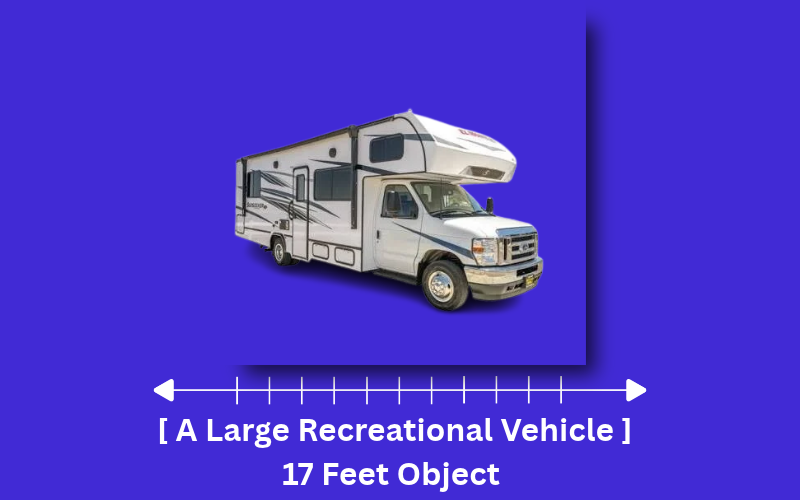
Some larger recreational vehicles can measure around 17 feet long, particularly smaller camper-style vehicles and compact recreational models. Their dimensions vary considerably, so not every recreational vehicle will match this length.
A vehicle measuring 17 feet from its frontmost point to its rearmost point provides a useful real-world example of the measurement. Its long body makes it easier to imagine how far 17 feet extends along a driveway or parking space.
If you are comparing a vehicle with a garage or parking area, remember to account for extra space needed for access and movement. Always check the manufacturer’s stated length rather than relying on the general vehicle category.
2. A Long Display Board Arrangement
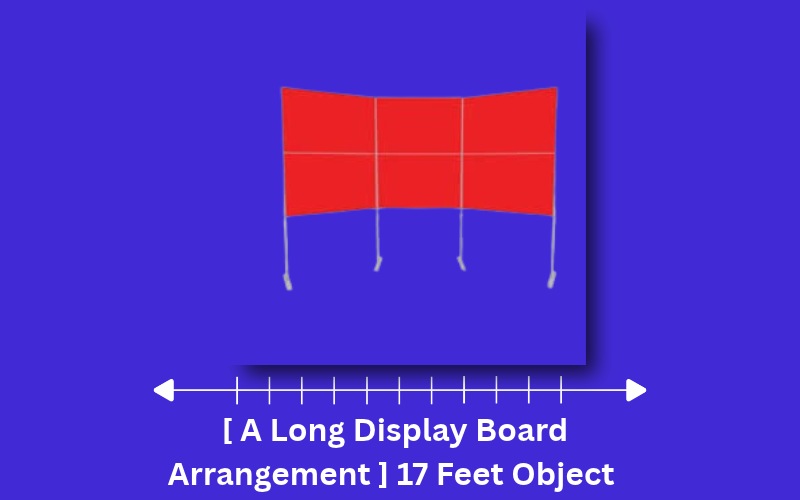
A display made from several connected boards can span approximately 17 feet. This might be used for a school event, exhibition, community display, or large presentation area.
For example, five boards measuring 3 feet each plus one board measuring 2 feet would create a total length of 17 feet. Arranging the boards edge to edge makes the overall measurement easier to understand.
This is a helpful comparison because the total length can be calculated from known sections. It also shows how several shorter items can combine to create one longer distance.
3. A Long Piece of Lumber
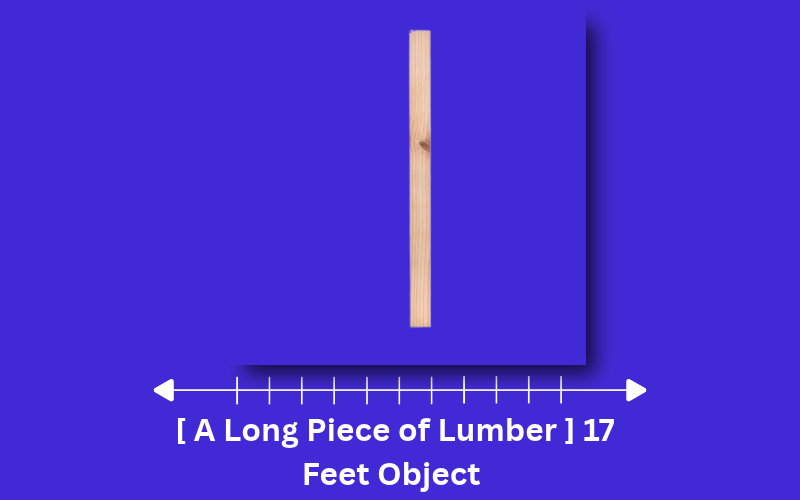
Long lumber pieces used in construction and home improvement projects can approach 17 feet, although standard stock lengths and availability vary by supplier. Some projects also use multiple pieces joined together to reach a required length.
A piece of lumber that measures exactly 17 feet would be equivalent to 204 inches. This can help builders and DIY enthusiasts understand the scale of a long beam, board, or other construction material.
Because long lumber can be difficult to handle and transport, its dimensions should be checked before purchasing. For an actual project, follow appropriate handling practices and use accurate measurements.
4. A Large Patio Furniture Arrangement
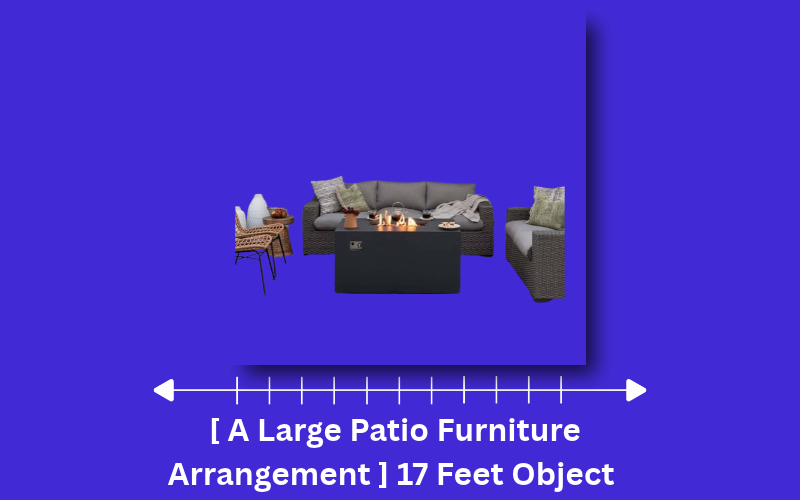
A large outdoor furniture arrangement can stretch approximately 17 feet from one end to the other. For example, a long outdoor sofa combined with additional seating may create a substantial seating area.
The overall measurement depends on the layout and the distance between individual pieces. If the furniture is arranged along one straight line, measuring from the outer edge of the first piece to the outer edge of the last piece gives the total length.
This comparison is useful when planning a patio, deck, or garden seating area. It helps you visualize how much horizontal space a large furniture arrangement can occupy.
5. A Large Decorative Banner
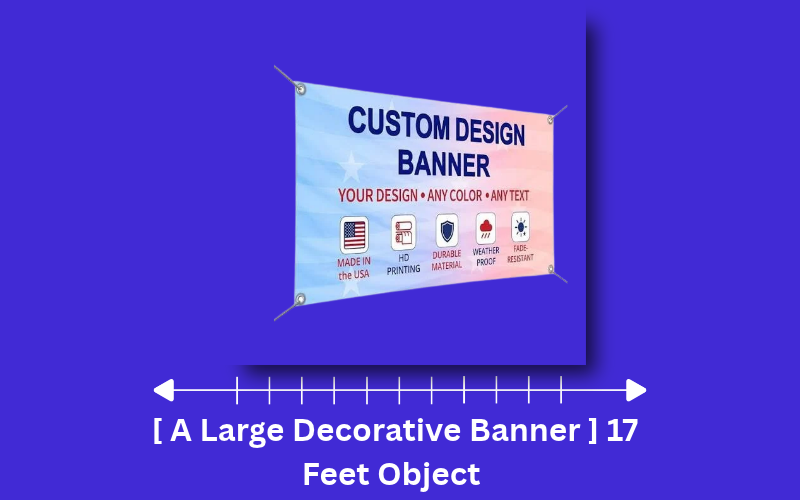
Some large decorative banners can span around 17 feet in width or length. Banners of this size may be used for school events, community celebrations, exhibitions, or large indoor and outdoor displays.
A banner measuring 17 feet across covers 204 inches, making it much longer than a typical small wall decoration. Its size becomes easier to visualize when you imagine it stretched across a wide wall or event backdrop.
When measuring a banner, distinguish between its fabric dimensions and the total space required for mounting. Hanging hardware and support structures may need additional room.
6. A Long Curtain or Drapery Span
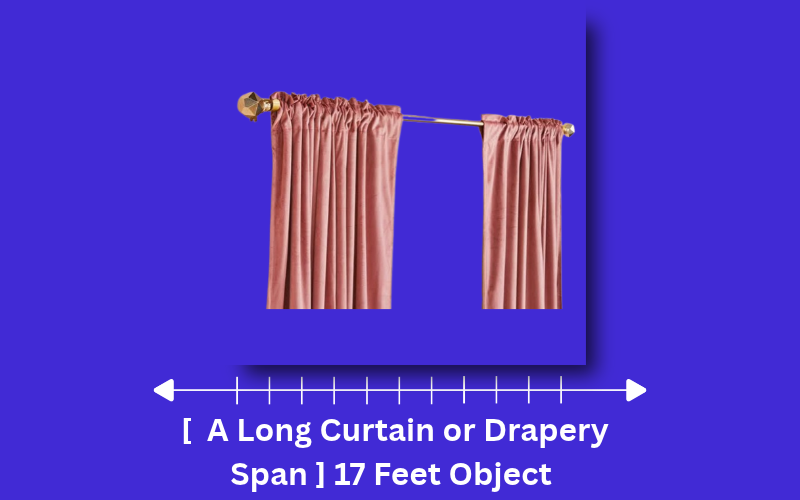
A wide curtain arrangement can span approximately 17 feet across a large window wall, patio opening, or room divider. The total width may consist of several curtain panels installed side by side.
For example, if several panels together cover a 17-feet-wide opening, their combined width represents the measurement. The amount of fabric needed may be greater than the opening width to allow for folds and gathering.
This example is particularly useful for home decoration projects. Before buying curtains, measure the actual opening and account for the style of hanging and the amount of fullness desired.
7. A Large Conference Table Arrangement
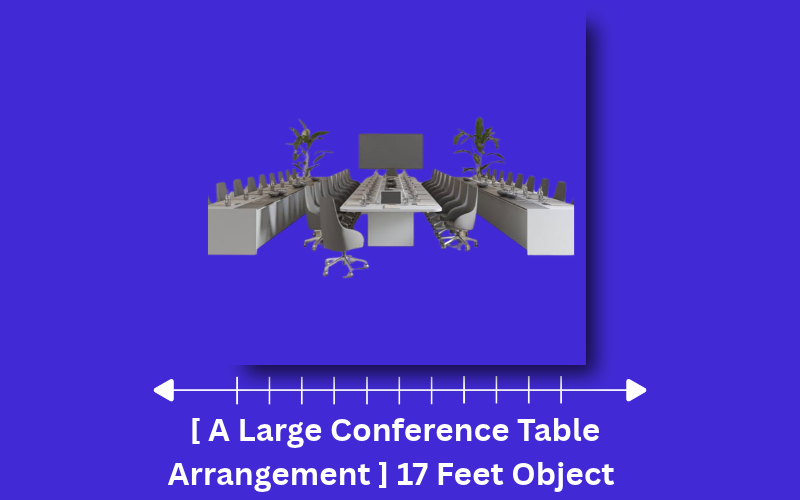
A conference table arrangement made from multiple connected tables can extend approximately 17 feet. This type of setup may be used in meeting rooms, training spaces, school events, or community gatherings.
The overall length depends on the dimensions and arrangement of the tables. If several tables are placed end to end, their individual lengths can be added to estimate the total.
For instance, four tables measuring 4 feet each plus one additional 1-feet section would make a combined length of 17 feet. This example demonstrates how smaller, measurable sections can help visualize a larger distance.
8. A Long Workshop Bench Arrangement
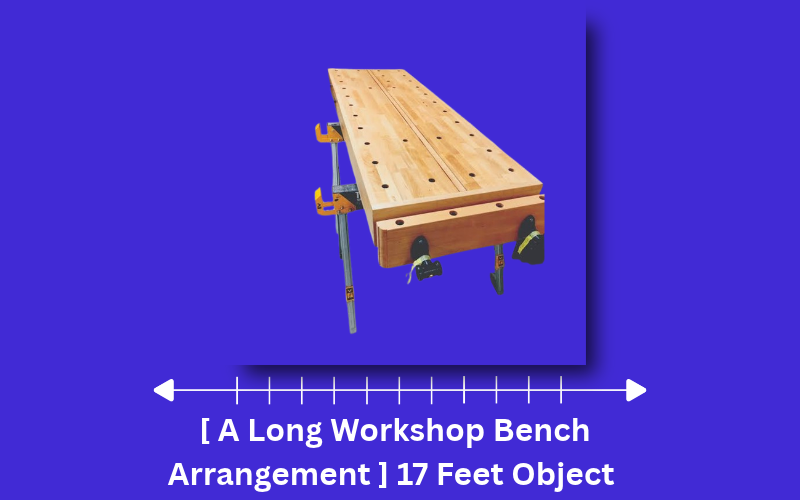
A workshop bench setup made from several sections can extend approximately 17 feet. Such an arrangement might provide space for tools, craft projects, equipment, or other work materials.
The total length can be calculated by adding the dimensions of the individual bench sections. A combination of shorter benches can therefore create a continuous work surface that measures close to 17 feet.
This example helps visualize the measurement in a garage, workshop, or hobby room. When planning a real workbench, leave enough space for movement, storage, and access to equipment.
9. A Long Fabric Roll
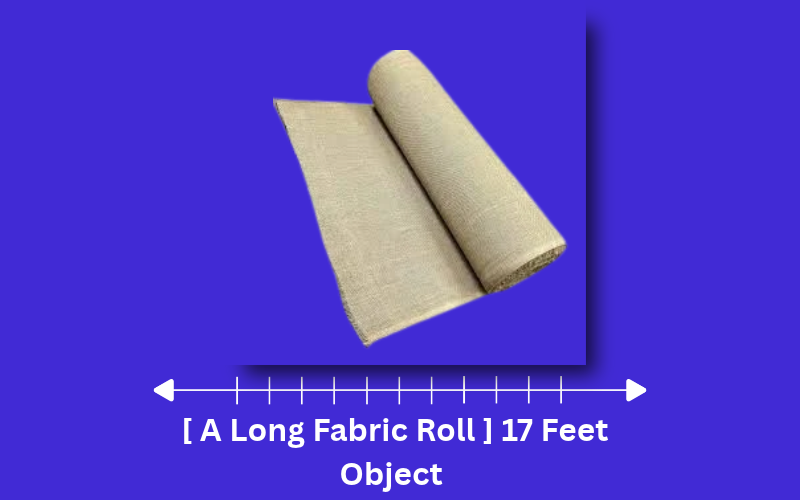
A piece of fabric measuring 17 feet in length can be useful for sewing, decorating, upholstery, or craft projects. Fabric is often sold by length, making it a practical example of how this measurement is used.
Seventeen feet of fabric equals 204 inches, or approximately 5.18 meters. This conversion is helpful when a pattern or project instructions use a different unit from the one listed by a fabric supplier.
Keep in mind that fabric may need extra length for hems, seams, pattern matching, or mistakes during cutting. Always check the project’s requirements before deciding how much material to purchase.
How to Measure 17 Feet Without a Ruler
If you do not have a ruler or measuring tape, you can estimate 17 feet by dividing the distance into smaller sections. For example, measure or estimate five sections of 3 feet each and add one section of 2 feet. The combined distance is exactly 17 feet.
Another method is to think in meters. Seventeen feet equals approximately 5.18 meters, so it is slightly longer than a 5-meter distance. If you have a known 5-meter reference, the additional 18 centimeters gives you a close estimate.
You can also use objects with known dimensions. If you have a board, cord, or measuring stick of a known length, lay it out repeatedly and add the sections together. For example, a 1-feet reference would need to be repeated seventeen times to equal 17 feet.
Remember that estimating with steps is less accurate because step lengths vary from person to person. For construction, purchasing materials, vehicle clearance, or other tasks where accuracy matters, use a proper measuring tape.
How to Read 17 Feet on a Measuring Tape
A standard measuring tape marked in feet and inches can show 17 feet directly. Find the 17-feet mark, or locate the equivalent measurement of 204 inches.
If your tape displays only inches, start at zero and measure to 204 inches. On a tape marked in both units, 17 feet may appear as 17 feet 0 inches.
For longer distances, make sure the tape remains straight and properly aligned. If the distance is longer than the tape itself, mark the end of each section and continue measuring from that point.
Avoid allowing the tape to bend or sag significantly, as this can affect the measurement. For greater accuracy over long distances, having another person help hold the tape can be useful.
How Long Is 17 Feet Compared With 5 Meters?
Seventeen feet is slightly longer than 5 meters.
Five meters equals approximately 16.4 feet, while 17 feet equals 5.1816 meters. Therefore, 17 feet extends about 18.16 centimeters beyond 5 meters.
This is a helpful comparison for anyone more familiar with metric measurements. Imagine a straight line that is 5 meters long, then add approximately 18 centimeters to visualize 17 feet.
How Long Is 17 Feet Compared With 20 Feet?
Seventeen feet is 3 feet shorter than 20 feet.
A 20-feet distance equals 240 inches, while 17 feet equals 204 inches. The difference is 36 inches, which is exactly 3 feet.
This comparison can help when estimating long objects, rooms, or outdoor spaces. If you know what a 20-feet span looks like, imagine shortening it by 3 feet to get a length of 17 feet.
How Long Is 17 Feet Compared With 10 Feet?
Seventeen feet is 7 feet longer than 10 feet.
Ten feet equals 120 inches, while 17 feet equals 204 inches. The difference between these lengths is 84 inches, or 7 feet.
If you already understand the length of a 10-feet object, adding another 7 feet provides a useful way to visualize 17 feet. You can also split the total into 10 feet plus 7 feet when measuring a long area in sections.
Common Mistakes When Estimating 17 Feet
One common mistake is assuming that a large object measures 17 feet based on appearance alone. Vehicles, furniture arrangements, boards, and outdoor structures come in many different sizes, so visual comparisons are only estimates.
Another mistake is confusing feet with inches. Seventeen feet equals 204 inches, not 17 inches. Remember that every feet contains 12 inches.
It is also easy to overlook extra space when measuring an area for a large object. A vehicle, furniture arrangement, or workbench may need clearance beyond its own length.
Finally, be careful when measuring around corners or along curved routes. A straight-line distance and the actual length of a path are not always the same. Measure along the route that matters for your project.
I hope this article was helpful for you. Visit More articles:
- How Long Is 12 feet ? A Simple Visual Guide
- How Long Is 13 feet ? A Simple Visual Guide
- How Long Is 14 feet ? A Simple Visual Guide
- How Long Is 15 feet ? A Simple Visual Guide
- How Long Is 16 feet ? A Simple Visual Guide
FAQs
How long is 17 feet in inches?
Seventeen feet equals exactly 204 inches because each feet contains 12 inches.
How many meters are in 17 feet?
Seventeen feet equals 5.1816 meters, which is slightly more than 5 meters.
How many centimeters are in 17 feet?
Seventeen feet equals 518.16 centimeters.
Is 17 feet longer than 5 meters?
Yes. Five meters is approximately 16.4 feet, so 17 feet is about 18.16 centimeters longer than 5 meters.
What everyday things are about 17 feet long?
Depending on their dimensions, some recreational vehicles, long lumber pieces, decorative banners, garden hose sections, curtain arrangements, and connected furniture setups can measure around 17 feet.
How can I measure 17 feet without a measuring tape?
You can estimate the distance using smaller known lengths. Five sections of 3 feet plus one section of 2 feet add up to 17 feet. This is an estimate unless each section is measured accurately.
How many yards are in 17 feet?
Seventeen feet equals approximately 5.67 yards, because 3 feet make 1 yard.
How many inches should I measure for 17 feet?
Measure 204 inches to get exactly 17 feet.
Is 17 feet a long distance?
Compared with most household objects, 17 feet is a substantial length. It is useful for visualizing large furniture arrangements, room dimensions, outdoor structures, and some vehicles.
Read More: How Long Is 15 feet ? A Simple Visual Guide
Conclusion
So, how long is 17 feet? Seventeen feet equals 204 inches, 518.16 centimeters, or approximately 5.18 meters. It is a useful measurement to understand when estimating large objects, planning rooms, arranging outdoor furniture, measuring materials, or organizing a long work area.
Examples such as a large recreational vehicle, a long display arrangement, a piece of lumber, a decorative banner, or connected furniture sections can help you picture this length. However, these objects vary in size, so their actual dimensions should always be checked when accuracy matters.
For a simple mental reference, remember that 17 feet is slightly longer than 5 meters and 3 feet shorter than 20 feet. If you need an exact measurement for a project, use a measuring tape and convert the distance to inches or centimeters as needed. With these comparisons and conversions, estimating 17 feet becomes much easier.