
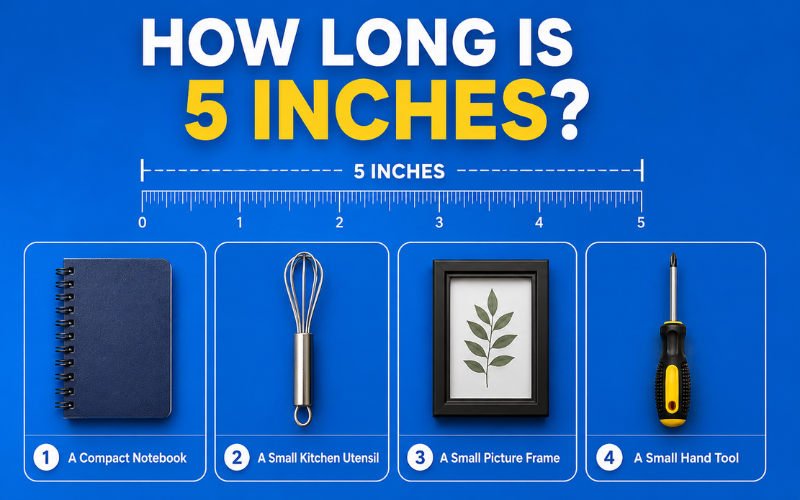
How long is 5 inches? Five inches is exactly 12.7 centimeters (cm) or 127 millimeters (mm). It is a small measurement commonly used for everyday objects, tools, electronics, accessories, and product dimensions. If you do not have a ruler nearby, comparing 5 inches with familiar objects can make this measurement much easier to understand.
Five inches is five times the length of one inch. Since 1 inch equals 2.54 centimeters, multiplying 2.54 by 5 gives exactly 12.7 centimeters. In simple terms, you can think of 5 inches as slightly longer than 12.5 centimeters.
How Long Is 5 Inches?
Five inches is a useful everyday measurement that becomes easier to understand when you compare it with centimeters, millimeters, and a simple visual ruler.
5 inches = 12.7 centimeters
Five inches is exactly 12.7 centimeters or 127 millimeters. It is also equal to 5/12 of a foot. This measurement is commonly useful when describing the size of everyday objects.
A useful everyday length
The exact metric equivalent
Another way to measure it
How Long Is 5 Inches?
| Measurement | Equivalent |
| 5 inches | 12.7 cm |
| 5 inches | 127 mm |
| 5 inches | 0.4167 feet |
| 5 inches | 0.127 meters |
The main conversion to remember is:
5 inches = 12.7 cm = 127 mm
What Does 5 Inches Look Like?
Five inches is a relatively short distance that can easily fit across many small household objects. On an inch ruler, it is the distance from the 0 mark to the 5-inch mark.
Another easy way to picture it is to imagine five one-inch sections placed end to end. If you are more familiar with centimeters, imagine a distance of 12.7 centimeters.
Everyday objects can also provide useful comparisons. A small comb, compact notebook, paintbrush, pencil section, or small tool may have one dimension close to 5 inches. These are only approximate references because object sizes can vary.
How Long Is 5 Inches in Centimeters?
Five inches is exactly 12.7 centimeters.
The calculation is:
5 × 2.54 = 12.7 cm
So, if a product is listed as 5 inches long, you can understand its size as 12.7 centimeters.
How Long Is 5 Inches in Millimeters?
Five inches equals exactly 127 millimeters.
The calculation is:
5 × 25.4 = 127 mm
This means 5 inches is slightly longer than 125 millimeters. Millimeters are useful when working with smaller objects and when a more precise measurement is needed.
How Long Is 5 Inches Compared With 4 Inches?
Five inches is exactly one inch longer than 4 inches.
- 4 inches = 10.16 cm
- 5 inches = 12.7 cm
The difference between them is 2.54 centimeters.
If you already know what 4 inches looks like, simply adding one more inch gives you 5 inches.
Read More: How Long Is 4 Inches? A Simple Visual Guide
9 Everyday Things That Are About 5 Inches Long
The following objects can help you develop a visual understanding of approximately 5 inches. Their actual sizes may vary, so they should not be considered exact measurements.
1. A Short Pencil Section
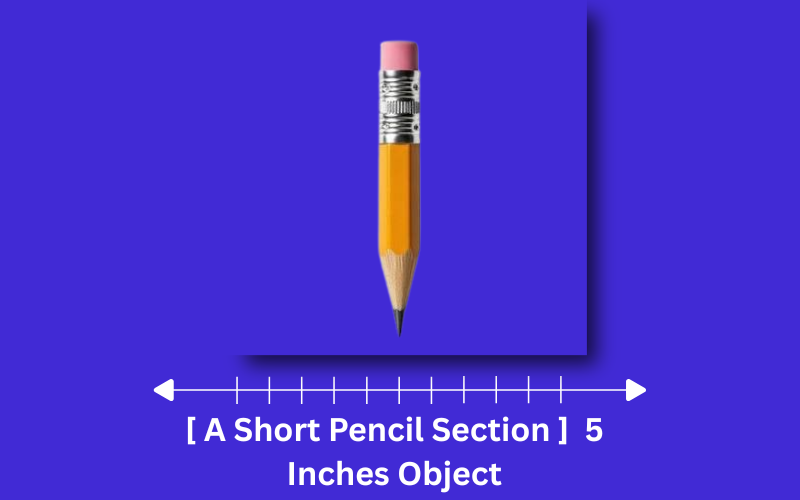
A standard pencil is usually longer than 5 inches, but you can measure a 5-inch section of one very easily.
Place the pencil next to a ruler and mark exactly 5 inches from one end. The distance between the end and the mark gives you a physical example of 5 inches.
Because pencils are straight, they are particularly easy to use for measurement comparisons.
2. A Small Hair Comb
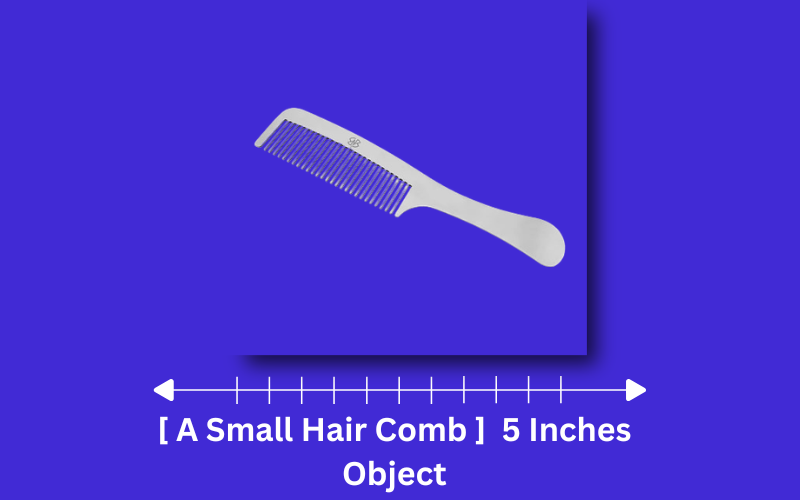
A compact hair comb can sometimes have an overall length close to 5 inches. Small travel combs are particularly useful for visualizing this measurement.
However, combs come in many different sizes. Some are shorter than 5 inches, while larger combs can be considerably longer.
If you have one nearby, compare its length with a ruler to see how close it is to 5 inches.
3. A Compact Notebook
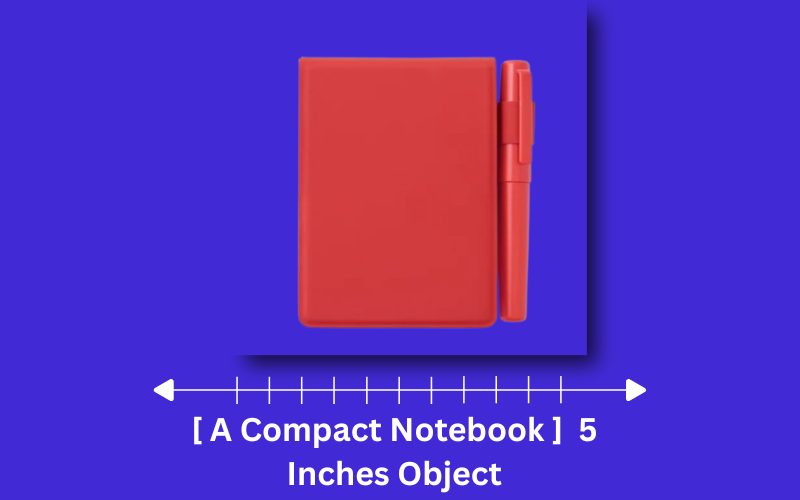
A small notebook may have a width or height close to 5 inches. Pocket notebooks and memo books can provide a convenient comparison.
The exact dimensions depend on the notebook. One may be approximately 5 inches wide while being considerably taller.
Always specify whether you are comparing the notebook’s width, height, or thickness.
4. A Small Paintbrush
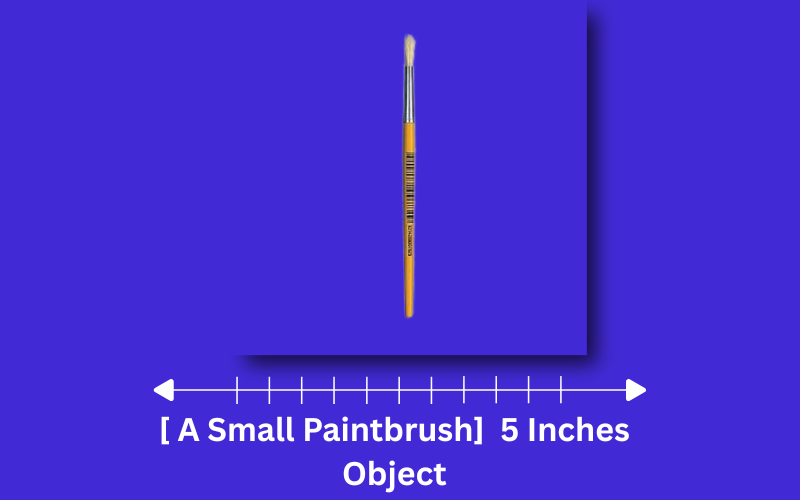
Some small paintbrushes can be close to 5 inches in overall length. Craft and detail brushes are often compact enough to provide a useful comparison.
Paintbrushes come in many sizes, so the exact length will depend on the particular brush.
Place the brush beside a ruler to determine whether its length is approximately 5 inches.
5. A Small Kitchen Utensil
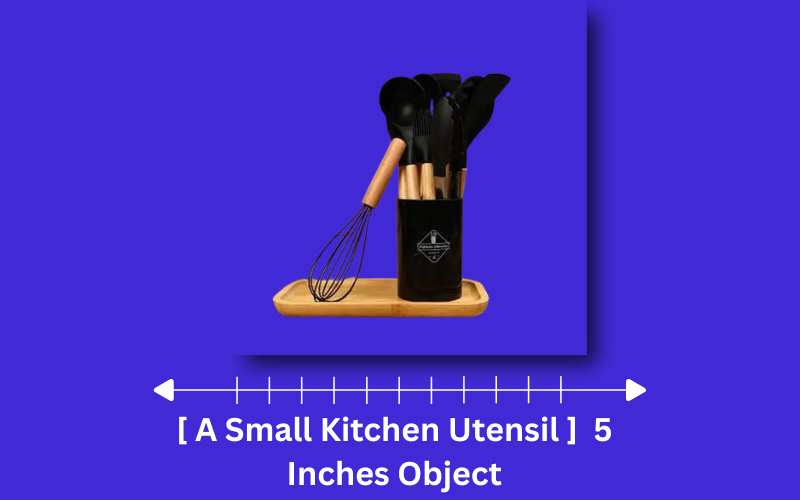
A compact kitchen spoon or other small utensil may have a handle or overall length close to 5 inches.
Kitchen utensils have different designs and sizes, so not every utensil will match this measurement.
When comparing one with 5 inches, measure the exact part you are interested in rather than estimating its size visually.
6. A Small Picture Frame
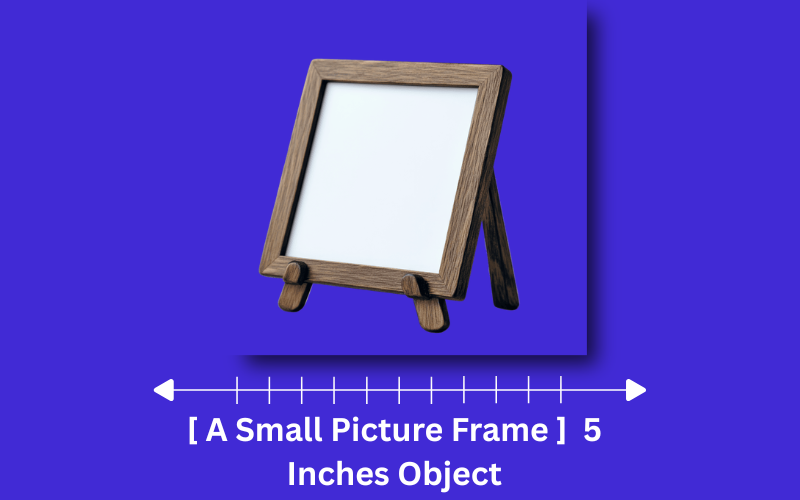
A compact picture frame may have one side that measures around 5 inches. Small decorative or tabletop frames can provide a useful household comparison.
A frame may be 5 inches wide but much taller, so it is important to identify the particular dimension being measured.
This makes a small frame a helpful example of how width and height can describe different measurements.
7. A Small Hand Tool
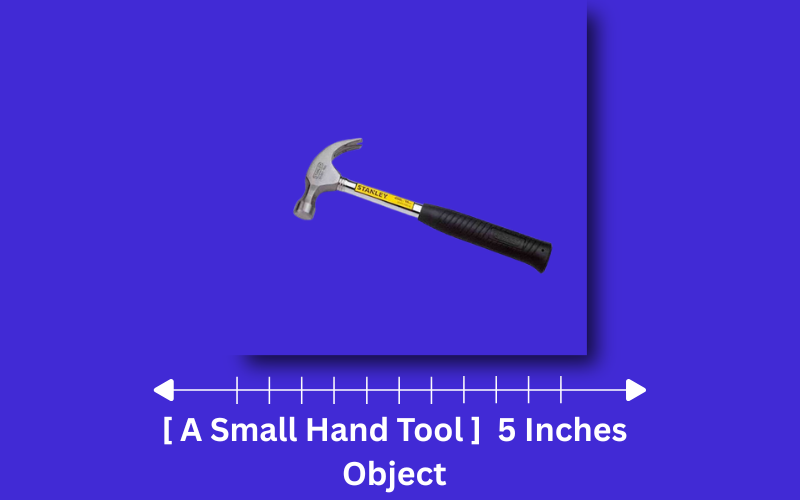
Some compact hand tools have handles or sections that are approximately 5 inches long.
Small screwdrivers, craft tools, and similar items may have a 5-inch section even when their complete length is greater.
Measure the specific part of the tool you want to compare rather than assuming the entire tool is 5 inches.
8. A Small Makeup Brush
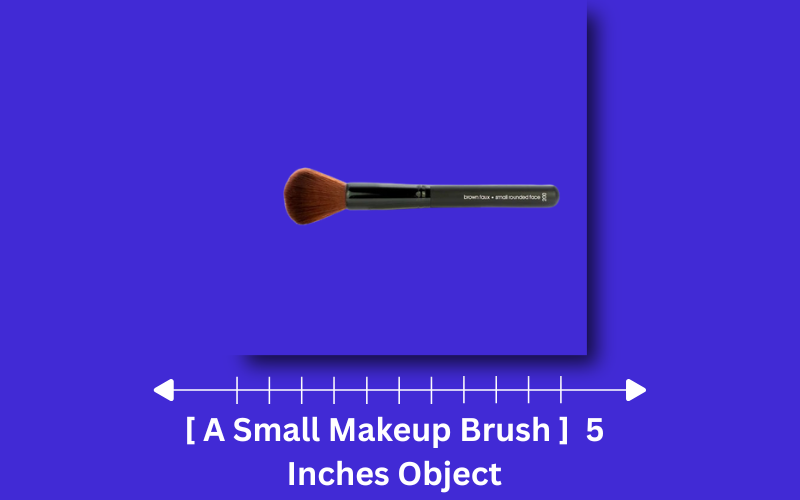
A compact makeup brush may have an overall length close to 5 inches. Travel-size brushes can be especially useful as a visual reference.
Brushes are produced in many different sizes, so their exact dimensions vary.
Their straight handles make them easy to place beside a ruler and compare with the 5-inch mark.
9. A Small Wooden Craft Stick
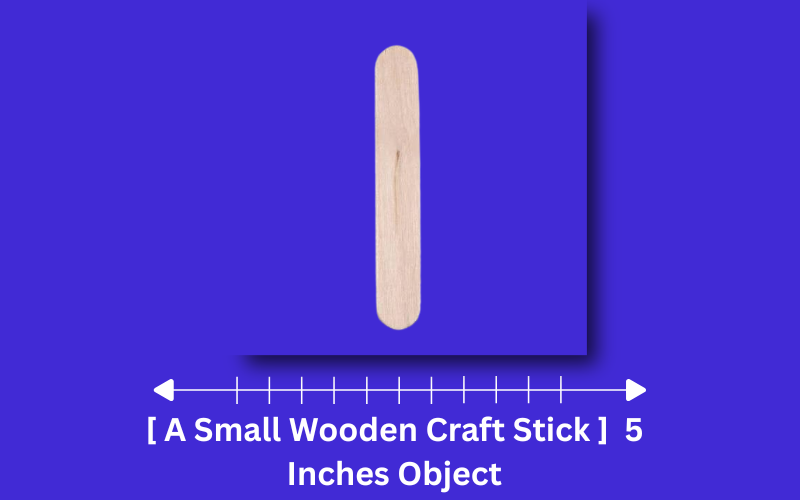
A short wooden craft stick can provide a simple comparison if its length is close to 5 inches.
Craft sticks are available in different sizes, so you should measure the particular stick rather than assuming it has a standard length.
Its straight shape makes it easy to compare with a ruler and visualize the distance.
How to Measure 5 Inches Without a Ruler
Without a ruler, you can estimate 5 inches by remembering that it equals 12.7 centimeters.
You can also visualize five one-inch sections placed end to end. Familiar objects can provide additional visual references.
These methods are useful for approximate measurements, but they should not replace a ruler when accuracy is important.
How to Read 5 Inches on a Ruler
To measure 5 inches, start at the 0 mark and move along the ruler until you reach the 5-inch mark.
The distance between these two marks is exactly 5 inches.
Many rulers also divide each inch into smaller fractions, allowing you to measure distances such as 5.25, 5.5, or 5.75 inches.
How Long Is 5 Inches Compared With 10 Centimeters?
Five inches is longer than 10 centimeters.
5 inches = 12.7 centimeters
10 centimeters ≈ 3.94 inches
Therefore, 5 inches is 2.7 centimeters longer than 10 centimeters.
How Long Is 5 Inches Compared With 1 Foot?
There are 12 inches in one foot.
Therefore:
5 inches = 5/12 foot
or approximately:
5 inches = 0.4167 feet
Five inches is also one inch shorter than half a foot because half of 12 inches is 6 inches.
Common Mistakes When Estimating 5 Inches
One common mistake is assuming that 5 inches equals exactly 12.5 centimeters. The exact conversion is 12.7 centimeters.
Another mistake is assuming that every small object is approximately 5 inches. Objects such as combs, brushes, and notebooks come in many sizes.
It is also easy to measure the wrong dimension. An object can be 5 inches wide while being 8 inches long.
For accurate measurements, always use a ruler or another appropriate measuring tool.
I hope this article was helpful for you. Visit More articles:
- How Long Is 1 Inch? A Simple Visual Guide
- How Long Is 2 Inches? A Simple Visual Guide
- How Long Is 3 Inches? A Simple Visual Guide
- How Long Is 4 Inches? A Simple Visual Guide
FAQs
How long is 5 inches exactly?
5 inches is exactly 12.7 centimeters or 127 millimeters.
Is 5 inches the same as 12.5 centimeters?
No. Five inches equals exactly 12.7 centimeters.
How many millimeters are in 5 inches?
There are exactly 127 millimeters in 5 inches.
Is 5 inches a long measurement?
Five inches is a relatively short measurement. It equals 12.7 centimeters and is less than half a foot.
How can I visualize 5 inches?
Imagine five one-inch sections placed end to end, or compare the measurement with a small comb, notebook, brush, pencil section, or similar object.
Can I measure 5 inches without a ruler?
You can estimate 5 inches using familiar objects or by remembering its equivalent of 12.7 centimeters. For exact measurements, use a ruler.
How many feet are 5 inches?
Five inches equals approximately 0.4167 feet, or 5/12 of a foot.
What is half of 5 inches?
Half of 5 inches is 2.5 inches, which equals 6.35 centimeters.
Read More: How Long Is 3 Inches? A Simple Visual Guide
Conclusion
So, how long is 5 inches? Five inches is exactly 12.7 centimeters or 127 millimeters. It is a relatively small measurement that is commonly useful when describing everyday objects, household items, tools, accessories, and product dimensions.
The easiest way to visualize 5 inches is to imagine five one-inch sections placed end to end. You can also think of it as slightly longer than 12.5 centimeters.
Objects such as a short pencil section, small comb, compact notebook, paintbrush, small tool, or piece of string can help you understand the approximate physical size of 5 inches.
Remember that everyday objects can vary in size, so they should only be used as visual references. When an exact measurement matters, use a ruler, measuring tape, or another suitable measuring tool.
The key conversion to remember is:
5 inches = 12.7 cm = 127 mm